PEARL HORIZONS TRAVEL | HAWAII COLLECTION
Your Hawaiian Journey Continues

More Islands. More Experiences. More to Discover.
Your journey through Hawaii doesn't end here. Beyond its breathtaking coastlines and iconic island escapes, there's so much more to experience. Let's explore the details that can help make your Hawaiian getaway unforgettable.
Getting around Hawaii
Transportation is an important part of Hawaii travel planning, especially when visiting more than one island.
Getting around each island
Oahu: Rental cars, taxis, rideshare services, shuttles, guided tours, and TheBus provide transportation options. Waikiki and Honolulu can be explored without renting a car for every day of the trip.
Maui: A rental car is useful for exploring beaches, scenic drives, and attractions beyond the resort areas. Book ahead, especially during busy travel periods.
Kauai: A rental car is generally the most convenient option for independent exploration. Some remote attractions require advance planning, and parking may be limited.
Hawaii Island: Because of its large size, a rental car is strongly recommended for most visitors. Kona and Hilo are on opposite sides of the island, so plan driving time carefully.
Molokai: Transportation options are limited. Rental vehicles and prearranged transportation should be considered before arrival.
Lanai: Transportation is more limited than on the larger islands. Arrange rental vehicles, guided tours, or hotel transportation in advance.
Traveling between islands
Hawaii's islands are connected by short interisland flights. Travelers can fly between several islands, although smaller islands may have fewer flight options and some routes require connections.
Approximate flight times from Honolulu include:
Destination
Kauai
30 minutes
Maui
30 minutes
Molokai
20 minutes
Lanai
25 minutes
Hawaii Island — Kona
45 minutes
Hawaii Island — Hilo
50 minutes
Approximate Flight Time
These are approximate flight times, not total airport-to-airport travel times. Allow time for check-in, baggage, security, and ground transportation.
Should you visit more than one island?
A multi-island vacation can be wonderful, but changing islands involves additional flights, transfers, packing, and hotel check-ins.
For shorter trips, staying on one island may allow more time to explore and relax.
For longer vacations, two islands can provide a satisfying variety of experiences. Three or more islands may make sense when travelers have enough time and want a more extensive itinerary.
Planning tip: Don't try to see everything in one trip. Choosing the right island—or two—is often more rewarding than rushing through several.
Entry requirements and travel documents
Hawaii is a U.S. state, so travel requirements depend on where you're traveling from and your citizenship.
For travelers departing from the U.S. mainland
U.S. citizens traveling from another U.S. state to Hawaii are taking a domestic flight. A passport is not required for this domestic journey.
However, travelers age 18 and older need a TSA-accepted form of identification for airport security. A REAL ID-compliant state-issued driver's license or another acceptable form of identification, such as a valid U.S. passport, may be used.
Before departure:
-
Confirm your identification meets TSA requirements.
-
Check airline baggage and identification policies.
-
Keep flight and accommodation confirmations available.
-
Review any agricultural restrictions that apply to items you are bringing.
-
Check the rules for traveling with pets.
For international visitors
International visitors must meet applicable U.S. entry requirements, including passport and visa or ESTA requirements where applicable. Hawaii does not have a separate international immigration system.
Important agricultural requirements
Hawaii has strict agricultural inspection rules to protect its unique ecosystem.
Travelers arriving with plants, plant parts, animals, and other agricultural materials may need to declare and present those items for inspection.
When departing Hawaii for the mainland, certain fruits, plants, and other agricultural items are restricted or require inspection.
Official travel resources
Important
International travelers should verify entry requirements based on their own nationality and circumstances.
Domestic travelers should check identification requirements before heading to the airport.
Currency, Payments, and Budgeting
Hawaii uses the U.S. dollar, making payments straightforward for travelers from the mainland United States.
Credit and debit cards are widely accepted, and ATMs are available throughout the islands. However, some small businesses and remote locations may have limited payment options.
Before leaving home
-
Check your bank's card and ATM policies.
-
Review any foreign transaction fees if using an international card.
-
Carry a backup payment method.
-
Keep some cash available for smaller purchases and incidental expenses.
-
Confirm whether accommodations include parking, resort fees, or other charges.
What should you include in your Hawaii budget?
Hawaii can be an expensive destination, and costs vary significantly by island and season.
Consider:
-
Flights to Hawaii.
-
Interisland flights, if applicable.
-
Hotel or vacation rental costs.
-
Resort fees and parking.
-
Rental cars, fuel, and transportation.
-
Meals, drinks, and groceries.
-
Excursions and attraction admissions.
-
Park reservations and entry fees.
-
Tips and shopping.
-
Travel insurance.
A helpful budgeting tip
Compare the full cost of staying in a resort area with the cost of a rental accommodation farther away. A lower room rate may not save money if it requires additional transportation, parking, and dining expenses.
Health, Safety, and Travel Insurance
Hawaii offers incredible outdoor experiences, but visitors should understand the risks associated with the ocean, volcanic environments, hiking trails, weather, and remote locations.
Ocean Safety
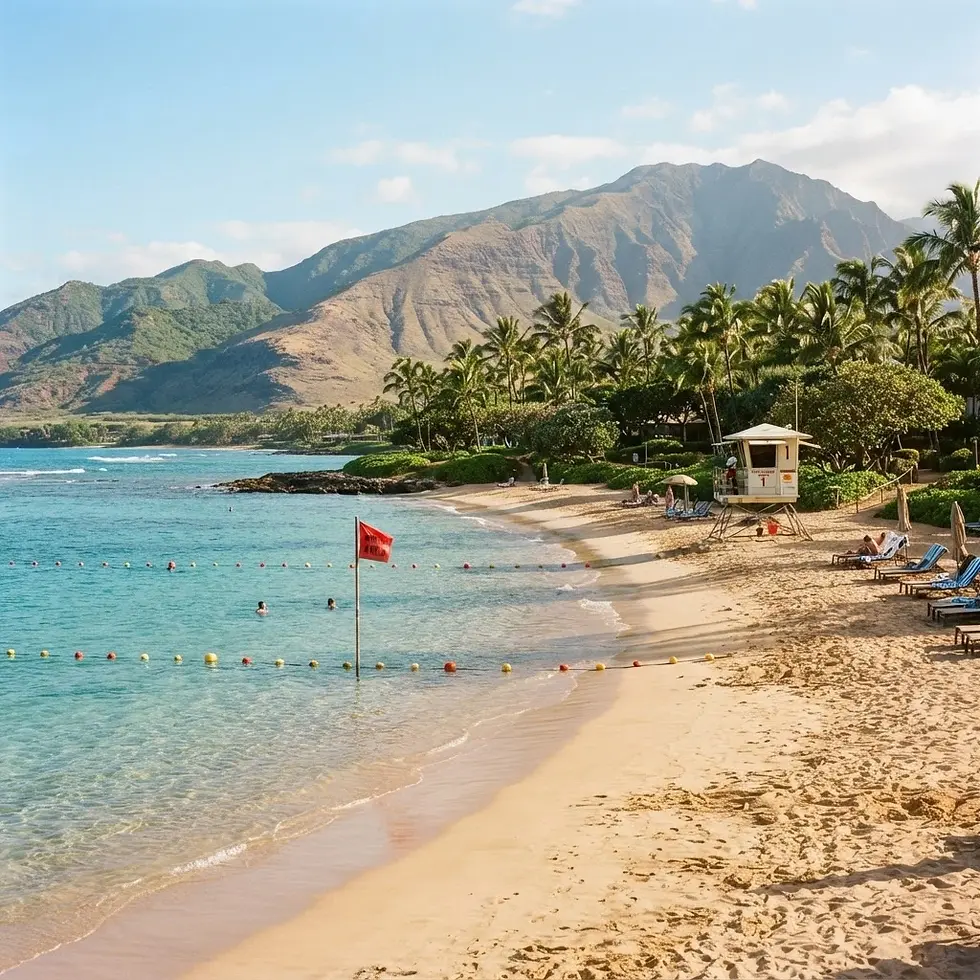
The ocean is one of Hawaii's biggest attractions—and one of its most important safety considerations.
-
Choose lifeguard-protected beaches whenever possible.
-
Ask lifeguards about current conditions before swimming.
-
Observe all warning signs and posted restrictions.
-
Never turn your back on the ocean.
-
Swim with a buddy.
-
Avoid entering the water during high surf or strong currents.
-
Never snorkel beyond your swimming ability.
-
Do not touch coral, sea turtles, monk seals, or other marine wildlife.
Hawaii's Ocean Safety program provides detailed guidance on swimming, snorkeling, surf conditions, and beach hazards.
Hiking and Outdoor Safety
-
Research trails before setting out.
-
Check weather conditions and park closures.
-
Bring water, suitable footwear, and sun protection.
-
Stay on marked trails.
-
Avoid hiking during heavy rain or flash-flood warnings.
-
Carry a charged phone and let someone know your plans.
-
Do not enter closed or restricted areas.
-
Allow enough daylight to complete your activity safely.
Volcanic and Environmental Safety
If visiting volcanic areas:
-
Follow National Park Service and local authority instructions.
-
Stay behind barriers and away from unstable ground.
-
Do not approach active lava or volcanic vents.
-
Pay attention to volcanic gas and air-quality advisories.
-
Follow road closures and park alerts.
Volcanic activity and park conditions can change. Never assume an area is safe simply because it was open during a previous visit.
Travel insurance matters
Consider a policy that addresses:
-
Emergency medical expenses.
-
Medical evacuation.
-
Trip cancellation and interruption for covered reasons.
-
Travel delays.
-
Lost or delayed baggage.
-
Rental vehicle coverage, where appropriate.
-
Eligible adventure activities.
Even though Hawaii is part of the United States, travelers should not assume their regular health insurance covers every emergency, evacuation, or activity-related expense.
Connectivity, Electricity, and Practical Essentials
Mobile service and internet: U.S. mobile plans generally work in Hawaii under their domestic coverage terms. Check your carrier's plan, especially if traveling internationally or using a prepaid service. Coverage can be limited in remote valleys, mountainous areas, and some rural locations.
Electricity: Hawaii uses 120V electricity and standard Type A and B outlets, the same as the U.S. mainland.
Time zone: Hawaii follows Hawaii-Aleutian Standard Time (UTC−10) year-round and does not observe daylight saving time. The time difference from the mainland changes seasonally.
Drinking water: Public drinking water is generally safe in established areas. Follow local guidance and use caution with untreated stream or freshwater sources.
Accessibility: Accessibility varies by island, property, beach, trail, and excursion. Confirm accessible rooms, transportation, beach access, and mobility accommodations directly with providers.
Wildlife: Hawaii is home to protected species, including Hawaiian green sea turtles and Hawaiian monk seals. Observe wildlife from a safe distance and never feed, touch, chase, or disturb animals.
Emergency preparation: Save your accommodation address, emergency contacts, travel insurance information, and important confirmations. In an emergency, call 911.
What to Pack for Hawaii
Your packing list should reflect the island, season, and activities you plan to enjoy. Hawaii is not always hot and sunny everywhere, especially at higher elevations.
Packing tip: If your itinerary includes both beach days and mountain excursions, pack in layers. You may enjoy warm sunshine at sea level and much cooler conditions later in the same day.
Government-issued identification or passport as applicable.
Flight, hotel, and rental car confirmations.
Travel insurance information.
Lightweight daytime clothing.
Swimwear and beach cover-ups.
Comfortable walking shoes.
Sandals or water-friendly footwear.
Reef-conscious sun protection.
Sunglasses and a wide-brimmed hat.
Light rain jacket.
Insect repellent.
Reusable water bottle.
Hiking shoes if needed.
Warmer clothing for mountain or summit visits.
Prescription medications and personal supplies.
Phone charger and power bank.
Water-resistant phone pouch.
Small day bag.
Appropriate clothing for cultural or special dining experiences.
How Long Should You Stay?
The ideal length of a Hawaii vacation depends on how many islands you want to explore and the type of experience you prefer.
4–5 nights
A short getaway focused on one island, with time for a few attractions and relaxation.
6–7 nights
A good starting point for experiencing one island without rushing.
8–10 nights
More time for exploring one island in depth or enjoying a two-island itinerary.
11–14 nights
A more relaxed opportunity to explore two islands, with enough time to enjoy each location.
14 nights or longer
May suit travelers who want an extended multi-island vacation or a slower-paced experience.
Planning tip: These are planning suggestions, not fixed rules. Travel time, flight schedules, and the size of each island should influence the itinerary.
Hawaii Travel Planning Checklist
Before departure, make sure you have:
Selected the island or islands that match your vacation style.
Compared accommodation areas and property types.
Confirmed flights and any interisland connections.
Checked identification or international entry requirements.
Reviewed agricultural restrictions.
Reserved rental vehicles where needed.
Checked attraction and state park reservation requirements.
Reviewed ocean safety and seasonal surf conditions.
Checked weather, volcanic activity, and park alerts.
Confirmed travel insurance and medical coverage.
Planned excursions and transportation.
Prepared mobile connectivity and emergency information.
Packed for both coastal and higher-elevation conditions.
Reviewed cultural and environmental travel guidance.
Saved copies of confirmations, IDs, and insurance details offline.
Helpful Official Travel Resources
These resources help travelers verify information, understand local requirements, and prepare for their Hawaiian vacation.
Go Hawaii — Official Tourism Website
Explore the islands, attractions, accommodations, cultural experiences, travel planning, and visitor guidance.
National Weather Service — Hawaii
Review climate information, weather conditions, forecasts, and severe weather alerts.
Hawaii Ocean Safety
Learn about beach hazards, ocean conditions, snorkeling, currents, and safe water activities.
Hawaii State Parks
Review park information, visitor requirements, reservations, and access details.
National Park Service
Find visitor information for Hawaii Volcanoes National Park, Haleakala National Park, and other protected areas.
Centers for Disease Control and Prevention
Review destination-related health information and travel health recommendations.
U.S. Department of State
International visitors can review U.S. entry information, and all travelers can find official travel guidance.
Hawaii Department of Agriculture
Review agricultural restrictions for bringing plants, animals, and other materials into and out of Hawaii.
Agricultural travel requirements
Responsible Travel in Hawaii
Learn about cultural respect, environmental care, and ways to support local communities.

Let's Plan Your Hawaii Getaway
Your Hawaiian escape should be more than a vacation—it should be an experience worth remembering.
Whether you're dreaming of a romantic Maui retreat, an exciting Oahu getaway, a scenic Kauai adventure, a family vacation on the Big Island, or a multi-island journey, Pearl Horizons Travel can help you explore your options and bring your plans together. We'll help you choose the islands, accommodations, travel dates, transportation, and experiences that best match your vision.
Ready to Experience Hawaii?
Let's start planning your Hawaiian getaway! Consultations are complimentary and tailored to you.